


Archaeological Museum of Durrës fully restored under EU4Culture programme, marking completion of major EU investment in Albania’s cultural heritage
April 28, 2026
Durrës, Albania – The Archaeological Museum of Durrës has been fully restored, strengthened, and equipped with modern visitor facilities under the EU4Culture programme, funded by the European Union and implemented by UNOPS in partnership with the Ministry of Tourism, Culture and Sports (MTKS).
Severely damaged by the 2019 earthquake, the museum has been carefully rehabilitated and transformed into a resilient cultural landmark that preserves and presents Albania’s archaeological heritage.
The completion of works was marked by an official ceremony attended by H.E. Silvio Gonzato, EU Ambassador to Albania; Prime Minister Edi Rama; Minister of Tourism, Culture and Sports Blendi Gonxhja; UNOPS Country Manager for Albania and Kosovo Sabine Kania; United Nations Resident Coordinator in Albania Ingrid Macdonald; as well as ambassadors, partners, and community representatives.
H.E. Prime Minister Edi Rama: “The major restoration of numerous cultural heritage sites following the devastating earthquake of a few years ago was made possible through strong solidarity and close cooperation with the European Union. Through the EU4CULTURE programme, the EU provided vital support, and we did everything on our part through the right projects and the necessary commitment, to move this work forward and continue advancing it, as several sites are still under restoration. This is a truly transformative effort that speaks for itself, as reflected even in the external appearance of this museum, which has been fully reimagined inside, enriching the museum narrative and bringing the entire institution to a new level.”
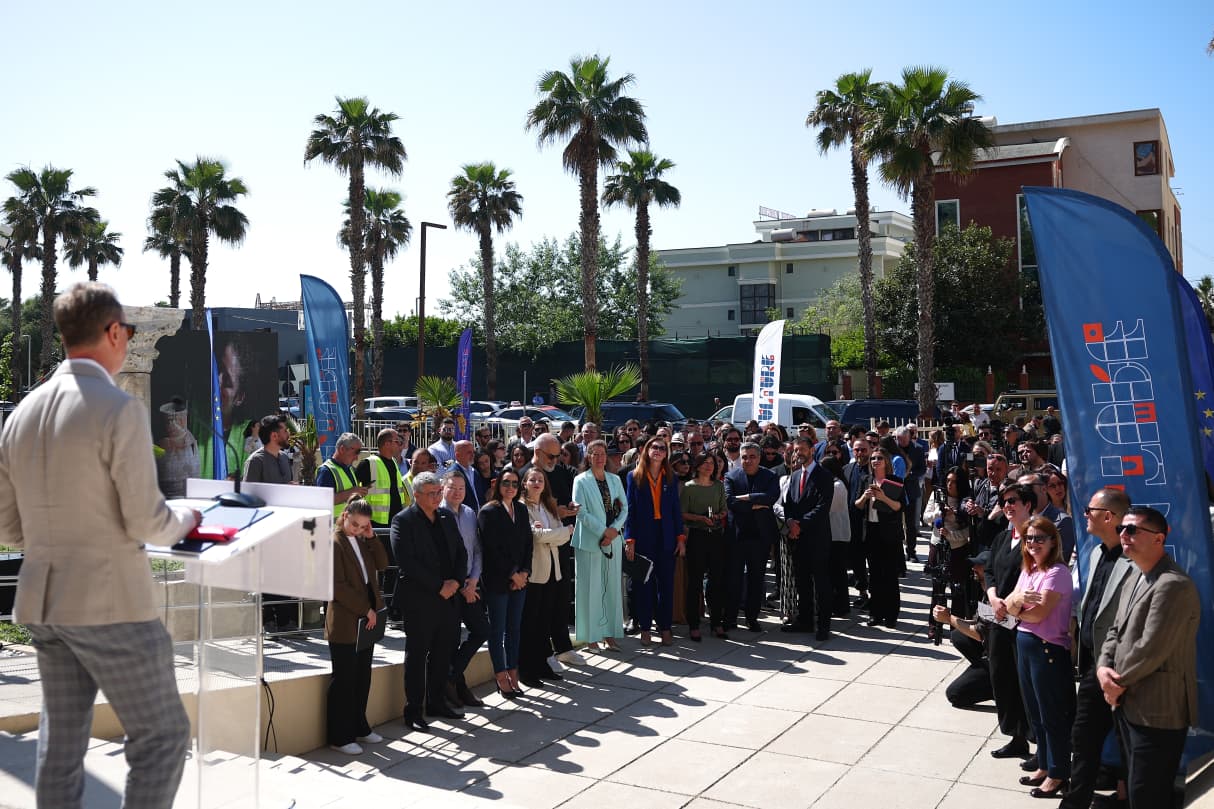
Ceremony marking the inauguration of the restored Archaeological Museum of Durrës
Speaking at the event, H.E. EU Ambassador to Albania, Silvio Gonzato said: “Proud to see the Archaeological Museum reopening its doors and showing the rich multilayered heritage of Albania. People often say that the EU is a faceless and heartless bureaucracy, yet programmes like EU4Culture demonstrate that solidarity lies at its core. This programme goes beyond restoring cultural heritage; it has helped revitalise Albania’s cultural landscape after the 2019 earthquake while engaging local communities and supporting artists. Through strong partnerships with central and local authorities, the programme has delivered tangible results by reopening sites in all municipalities affected by the tragic earthquake, boosting tourism and creating new opportunities for local economies. As Albania moves forward in its EU path, these revitalised spaces will continue to foster creativity, strengthen cultural identity and contribute to sustainable development.”
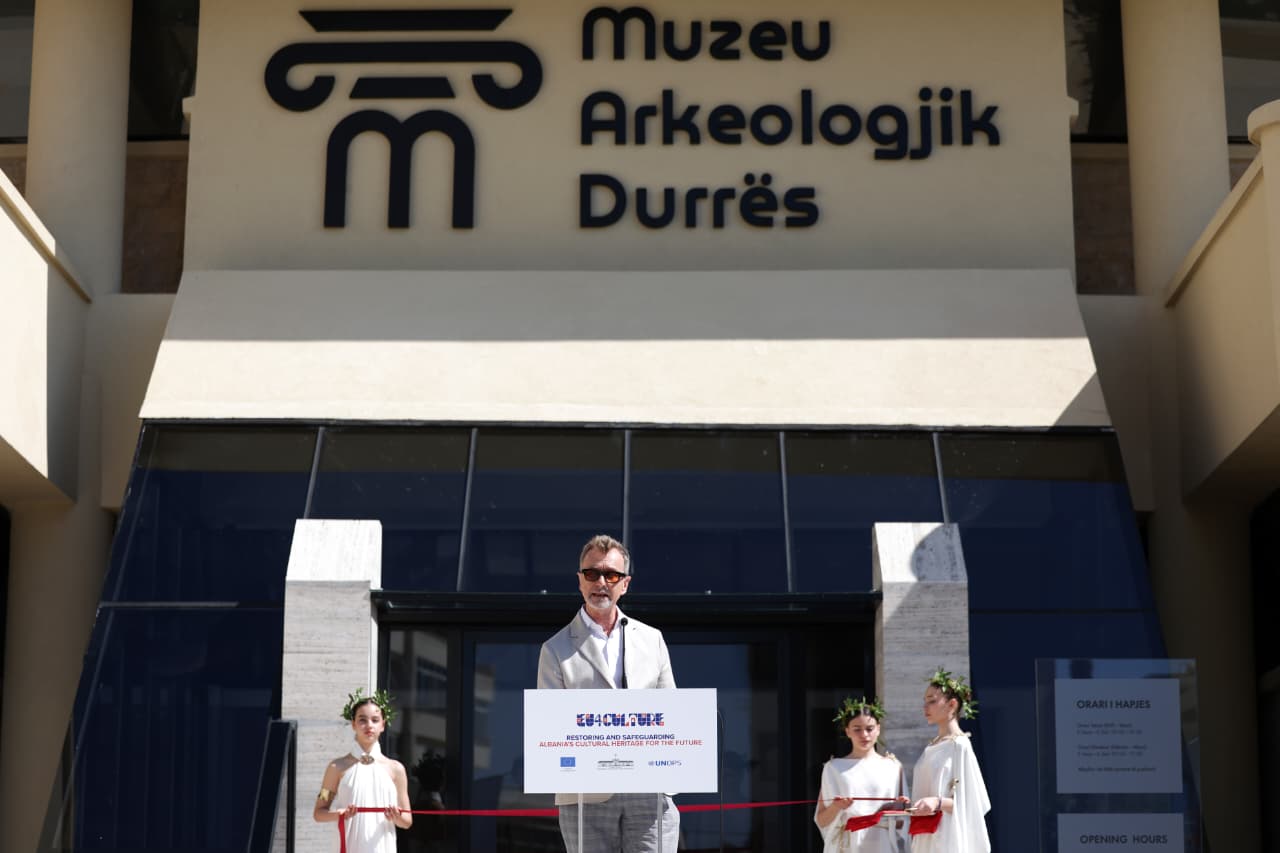
EU Ambassador Silvio Gonzato during his address at the inauguration ceremony
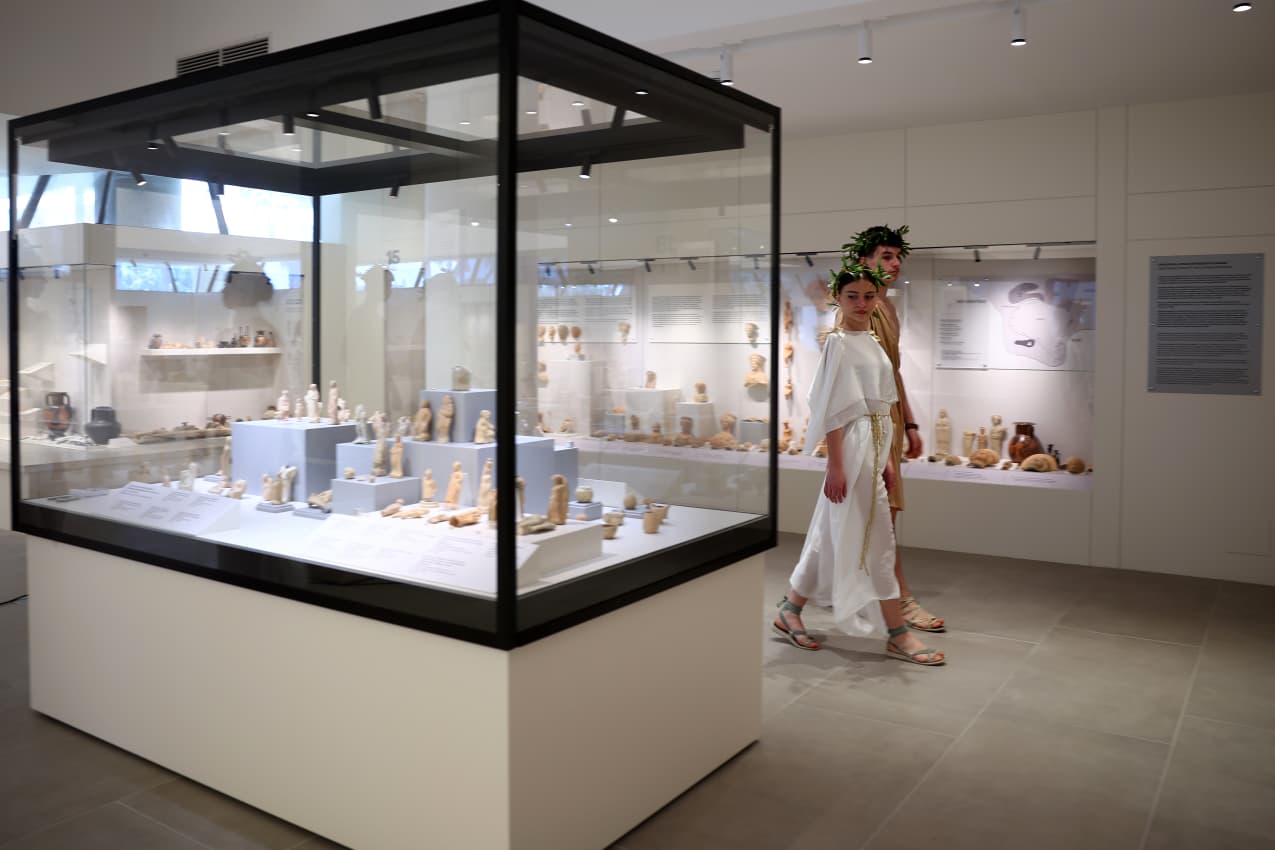
Minister of Tourism, Culture and Sports, Blendi Gonxhja said: “A historic moment for the Archaeological Museum of Durrës and for the city itself, which regains a fully transformed space invested in the preservation and development of our cultural heritage. With new operational standards, improved conditions, and a reimagined exhibition, we are returning to Durrës and to the public a new museum; fully restored, almost reborn, where over 3,200 artefacts elegantly narrate the past across redesigned pavilions. A new curatorial concept highlights the key themes of the museum’s narrative and the major historical periods, while also allowing for the continuous enrichment and updating of the exhibition with new discoveries. Among them, the most remarkable is the “Beauty of Durrës” mosaic, now returned home. This project, carried out in cooperation with the European Union through the EU4Culture programme and implemented by UNOPS, stands as a clear testament to our commitment to safeguarding our identity and transforming it into a valuable asset for future development. I would like to express my gratitude to all the institutions and individuals involved in the EU4Culture projects; project designers, collaborators, and everyone who contributed to this highly complex process: the National Institute of Cultural Heritage, the National Institute for Cultural Heritage Registration, the Durrës Museum Centre, the authors Iris Pojani, Lorenc Bejko, Belisa Muka, and Luan Përzhita; and the curator Yllka Gjikopuli. Special thanks go to those who worked on site: Sabina Veseli, Eda Andoni, Elvana Metalla, and Gjergji Vinjahu. Particular appreciation is extended to Lejla Hadžić, who over the years has become, more than ever, truly Albanian.”
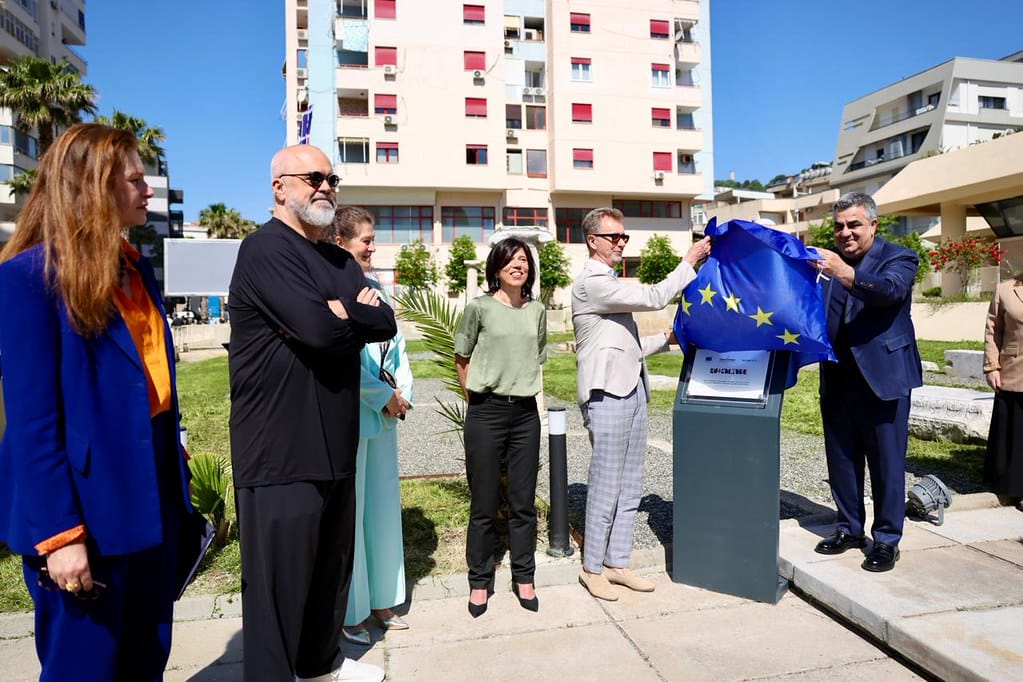
Unveiling of the plaque at the Archaeological Museum of Durrës
United Nations Resident Coordinator Ms Ingrid Macdonald said: “As the United Nations in Albania, we are proud to support the restoration of the Archaeological Museum of Durrës through the EU4Culture programme, an important testament to Albania’s rich heritage and resilience. Over the past five years, EU4Culture, an ambitious partnership between the European Union, the Government of Albania, and UNOPS has restored 23 heritage sites, created over 64,000 working days, and engaged more than 12,000 people, many through women-led initiatives. The Archaeological Museum of Durres will generate lasting cultural, economic, and social benefits for Durrës and beyond. This investment is not only in cultural heritage, but in the welfare and prosperity of people and communities.”
The intervention at the Archaeological Museum of Durrës included full structural rehabilitation, repair of earthquake damage, improved visitor accessibility, and the creation of improved museum displays and narrative. The largest archaeological museum in Albania, houses more than 2,800 artefacts from excavations in and around the ancient city of Dyrrhachium. The Archaeological Museum of Durrës is an intervention under the EU4Culture programme, a €40 million investment by the European Union, representing the largest EU investment in cultural heritage in the Western Balkans. The programme supports the restoration and revitalization of 23 heritage sites across Albania. The programme has also supported community development and cultural engagement, reaching over 12,000 people through grants and initiatives that promote both tangible and intangible heritage, including crafts, traditions, music, cuisine, and local knowledge.
